Posts

The French Revolution

Image
  Photo by Norbu Gyachung The news lately has been full of reports of the revolt in France, of the “Gilets Jaunes” or “Yellow Vests.” Their demonstration was triggered by a new tax on gas which was announced for the next year, but its true motive is the increasing disparity between the rich and poor in the country. Today is the fourth day of confrontations, and the movement is now nationwide. Having been watching and waiting for years—decades—for a sign that the public was going to revolt against the ongoing squeezing of the middle classes between high taxes and low pay by western governments, it does not surprise me that it is France, the country in which democracy began, that has started it. After all, they were the people who once cut off the heads of their monarchy when a similar situation developed following the building of Versailles in the 1780s, and they still retain enough democracy to demonstrate without being killed. While the publ...

Shark Attacks and Crow Murders

Image
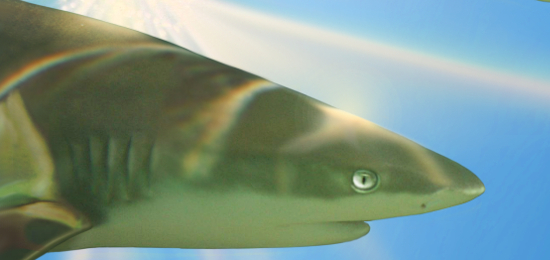
 What do they have in common?     When you watch the behaviour of many different wild animal species over long periods of time, you notice parallels which might not otherwise be seen. Having observed both species in the wild for many years in many different situations, I found a remarkable similarity between the behaviour of a flock of crows and a fleet of three dozen sharks. Though these animals are far apart on the evolutionary tree, it appears that their behaviour was similar because it had a common cause: both sharks and crows were angry.     The crows had systematically bullied the five off-spring of the local raven couple while they were maturing, and then the raven youngsters left the area late in the summer. But one of them returned in early winter, and when she did, the crows congregated around her in the trees, and when she alighted on the ground, they descended, prevented her from taki...

Fish Sentience, Consciousness and AI

Image
     Lynne U. Sneddon and some of her colleagues have published a paper targeting the resistance raised by fisheries interests to the idea that fish and other marine animals can suffer, entitled, Fish Sentience Denial : Muddying the Waters.      She is the researcher who first established that they can feel pain, and her findings have been confirmed in many ways and expanded upon by other scientists through rigorous scientific experimentation.      Yet each time they publish new evidence of fish sentience, fishing spokesmen attack the results and try to discredit them, sometimes by actually misstating their results. These attacks do not provide contradictory evidence, but only contradictory opinions, most of them based on the anthropocentric idea that since fish lack a human brain, they cannot suffer. You can see and download this important article here: https://animalstudiesrepository.org/animsent/vol3/iss21/1/...

Science's Blind Spot

Image
You are freed from the spell of the primate drama when you understand human behaviour in its correct context. But unfortunately, science has a blind spot that for centuries has caused it to stand in the way of the search for the true understanding of life. T rue science began with the work of Aristotle, in an effort to systematically analyse our surroundings—the lines, the curves, the way a stone would fall—for the understanding of our environment and from there, the universe. Through observation, measurement, and reflection, a detailed picture of reality and its mathematical underpinnings emerged over the centuries, independent from the folklore of the times . Thus the edifice of science was built in tiny increments, as facts that could be mutually verified accumulated through pure research done in the quest for knowledge . The Mechanical Philosophy In the 1600s western society was making swift progress in the invention of machines, and some intell...

Rebuttal to Shiffman and Hueter, Shark Finning Fisheries Lobbyists

Image
"The Shark Fin Sales Elimination Act" is considered to be vital in the fight against shark finning. Yet shark fisheries lobbyists David Shiffman and Robert Hueter are doing their best to block it. They have published a paper opposing the legislation, which has been echoed by the press in ways suggesting that banning the shark fin trade in the United States could be "bad for sharks." But their short and vacuous paper gives only three reasons to support their position and concerns itself with the well-being of shark fisheries, not sharks.    Firstly, they state that passage of the Act will "undermine decades of progress made towards ensuring sustainable shark fisheries in the United States and around the world." But in the absence of any evidence or reasoning in support this allegation, it remains nothing more than an opinion. The statement is neither scientific nor relevant to the real issue. The second reason given is that the legis...

Glenn Ashton's Review of The True Nature of Sharks

Image
"Occasionally a special book appears that makes you sit up and reconsider your understanding of the world, or at least a part of it. The True Nature of Sharks is such a book. It echoes the way that Diane Fossey and Jane Goodall forced us to completely reassess how we perceived the great apes, our closest relatives. While sharks may be only a very distant relative, Porcher’s book is no less revolutionary, in that it forces us to reassess how we perceive and understand sharks. Her work is instrumental in firmly shifting our understanding of sharks away from the obsolete trope of sharks as killing machines. Instead she portrays them as intelligent, predictable individual animals capable of so much more than generally assumed. "Through the ages sharks gained a largely unquestioned reputation as frightening predators just waiting to eat anything and anybody entering the watery realms. Modern history reinforced these tropes with stories of pilots and sailors being attacked...

Raising Shark Awareness

Image
My personal campaign to raise shark awareness began when the entire community of hundreds of sharks that I was studying, as animals and individuals, were finned for shark fin soup. Sharks (and fish) had turned out to be more interesting, more varied, and in many cases, more beautiful, than the North American wildlife I had known. They were just as intelligent, and far more responsive to me. They were definitely more alert, and made decisions more quickly, than people. Sharks were the first wild animals I had met that came to me instead of fleeing, and though I had fed the birds all my life, they never fluttered down around my shoulders when I went outside, or alighted in my hands to be stroked. But fish did. So it is especially sad to see how these remarkable submarine animals are considered and treated in our society, as being low, cold and not even capable of suffering pain. That is why I have been on a personal campaign ever since to improve public aw...